
SiLOSSiLOS

Mason bees: easy pollinators with no hive

About this photo

1What size tube actually works

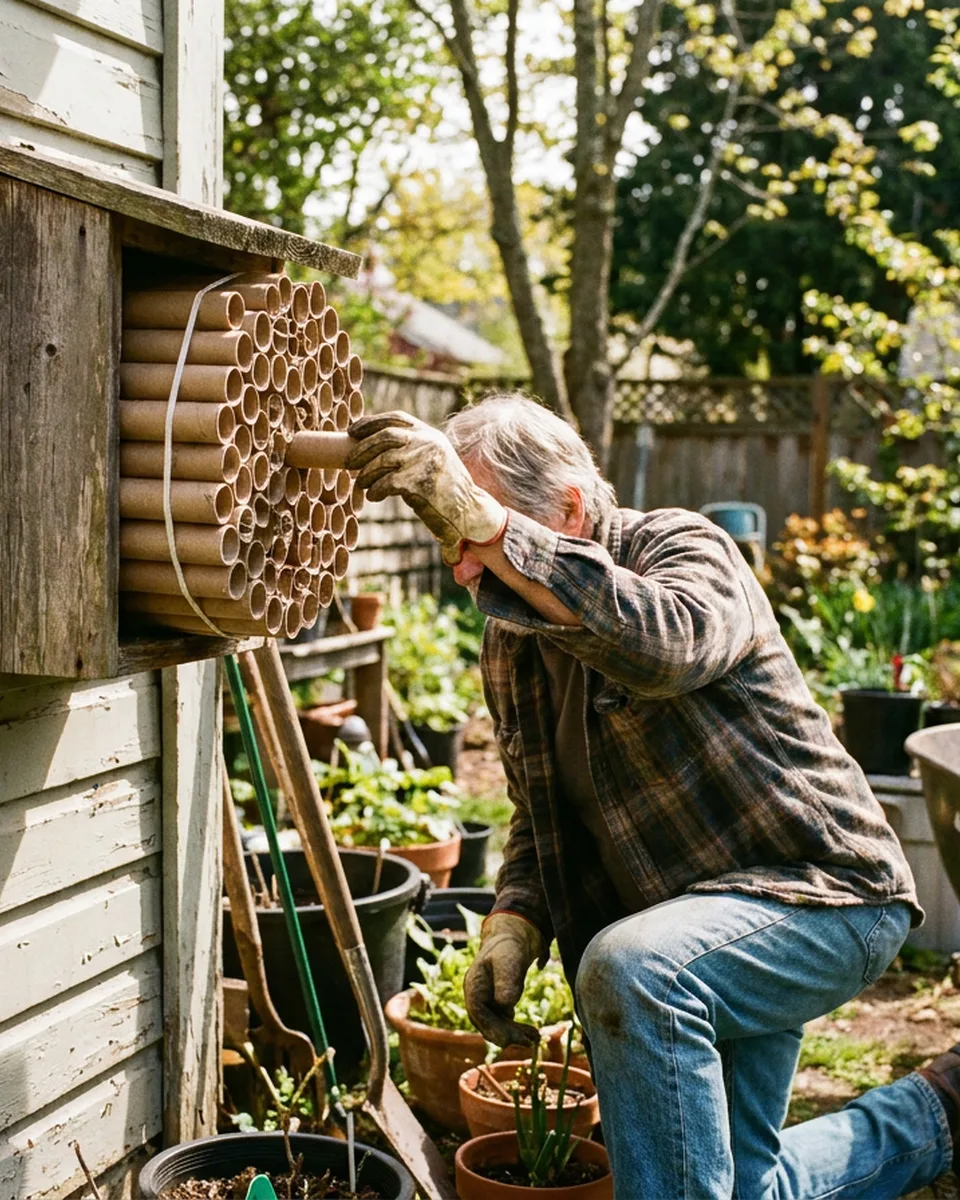
Mason bees favor tubes about 5⁄₁₆ inch in diameter and 5 to 6 inches long, closed at one end — shorter tubes get investigated and abandoned, wasting the bee's time. Cardboard tubes with paper liners or natural reeds are the right material; solid wood, bamboo or plastic hold moisture and trap mold and parasites because they can't be opened for cleaning.

2Placement matters more than the house's looks

Face the house south or southeast for morning sun, protected from hot afternoon sun and rain, mounted 3 to 6 feet off the ground. Keep it away from bird feeders and standing water, and within reach of both a pollen source and a mud source — mason bees seal each egg chamber with mud they collect nearby.

3Replace the tubes, don't clean them

Nesting tubes need to be swapped out every year after the bees emerge — trying to scrub a used tube clean enough to remove pathogens is nearly impossible, so replacement beats cleaning. A house built so the tubes can't be removed and replaced has to be thrown out entirely after one season.

4One generation, one season

Adults emerge in early spring once temperatures hit roughly 50–55°F, males first by a few days. A female provisions each cell with pollen and an egg, seals it with mud, and the larva spends the season eating, spinning a cocoon, and going dormant as an adult inside that cocoon until spring warmth starts the cycle again.

Explore this area
HomeHouseGardenFarm