SiLOSSiLOS

How Much Land Each Animal Really Needs

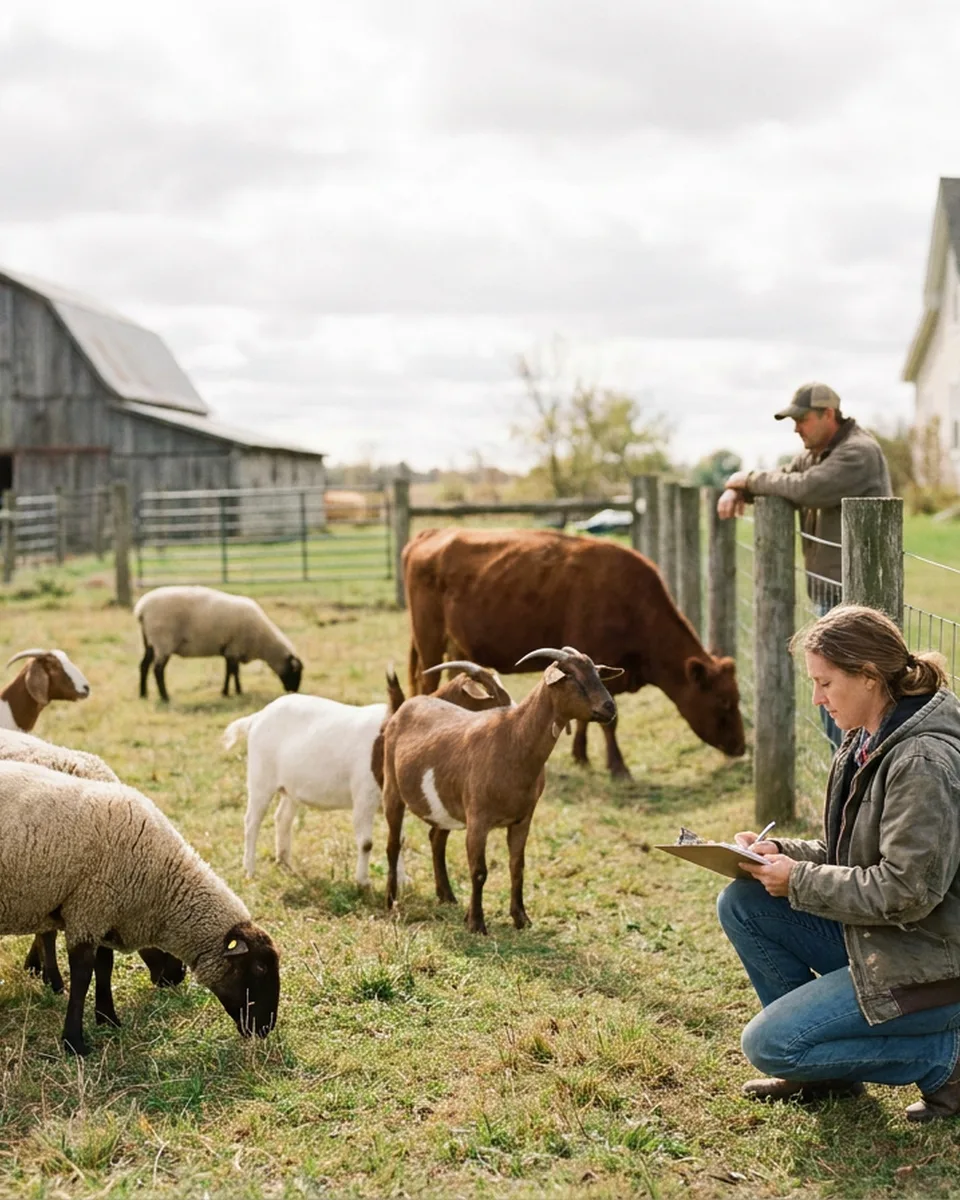
About this photo
1

1What an animal unit actually is

One animal unit (AU) equals the daily forage intake of a 1000-pound dry cow, about 25 pounds of dry matter forage a day. Every other class of livestock gets a fraction of that: a 110-pound brood ewe is 0.15 AU, a 175-pound ewe is 0.20 AU, a 300-pound mature ram is 0.40 AU.

2

2Why the pasture type changes the answer so much

The same animal unit needs about 1.3 acres of medium bluegrass-clover pasture in June but only 0.7 acres of better orchardgrass-clover pasture — nearly double the land on the lower-quality forage for the identical animal. Improving pasture quality is often cheaper than buying more acreage.

3Rotation multiplies the land you already have

True rotational grazing means moving animals before the regrowth reaches a week old — a three-to-five-day rotation is the common practical target, with daily rotation as the more intensive, more productive extreme. Research consistently shows frequent rotation increases the animals a given acreage can support, which is a cheaper lever than buying land.

4What goes wrong

Letting goats or sheep graze forage below about 1,000 to 1,200 pounds of dry matter per acre cuts their intake, because they can't get a full mouthful per bite — that's overgrazing showing up as reduced animal performance before it shows up as bare dirt.

5Goats aren't tiny cows

Left to sort their own diet, goats pick about 60 percent browse (brush, brambles, leaves) and only 30 percent grass; sheep flip that, favoring grass with more forbs mixed in. A pasture built for cattle is a pasture goats will pick at and complain about.

Explore this area
HomeHouseGardenFarm