SiLOSSiLOS

Plant it cold. Forget it. Spring happens.

About this photo
1

1The depth rule of thumb

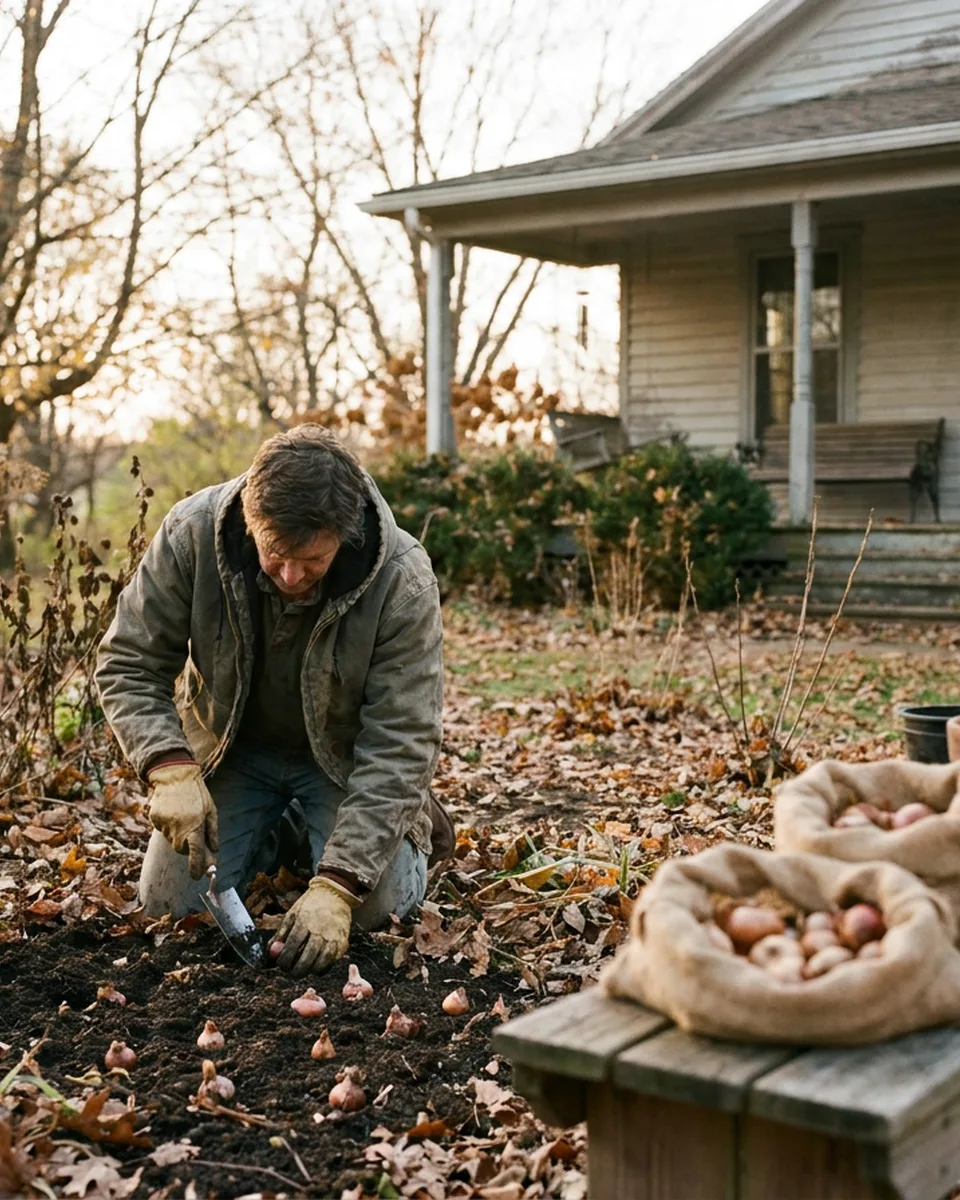
Plant a bulb about two to three times as deep as the bulb is tall, measured from the bottom of the bulb. A two-inch tulip bulb goes five to six inches down; most large bulbs like tulips and daffodils end up six to eight inches deep, smaller ones like crocus around three inches.

2

2The window

Plant from September into November, ideally finishing before the first hard frost so roots get a few weeks to establish before the ground locks up. Daffodils tolerate the earlier end of that window better than tulips do.

3

3The five that come back on their own

Daffodils, crocuses, alliums, grape hyacinths and snowdrops are the bulbs extension offices point to for naturalizing — spreading and multiplying on their own through lawns, borders and woodland edges for years, instead of fading out after one good spring.

4

4The one the squirrels leave alone

Daffodils are toxic enough that squirrels and deer generally skip them; tulips and crocus are the ones that get dug up and eaten, so mixing daffodils in with a planting of tulips is the usual defense, along with a layer of chicken wire just under the soil surface.

5

5Feed the roots, not the leaves

Bulbs need phosphorus at the root zone to build a strong root system, which means working bonemeal or bulb fertilizer into the soil below planting depth before you set the bulb in — spreading it on top afterward barely reaches the roots at all.

Explore this area
HomeHouseGardenFarm