
SiLOSSiLOS

Three free ways to feed your soil

About this photo

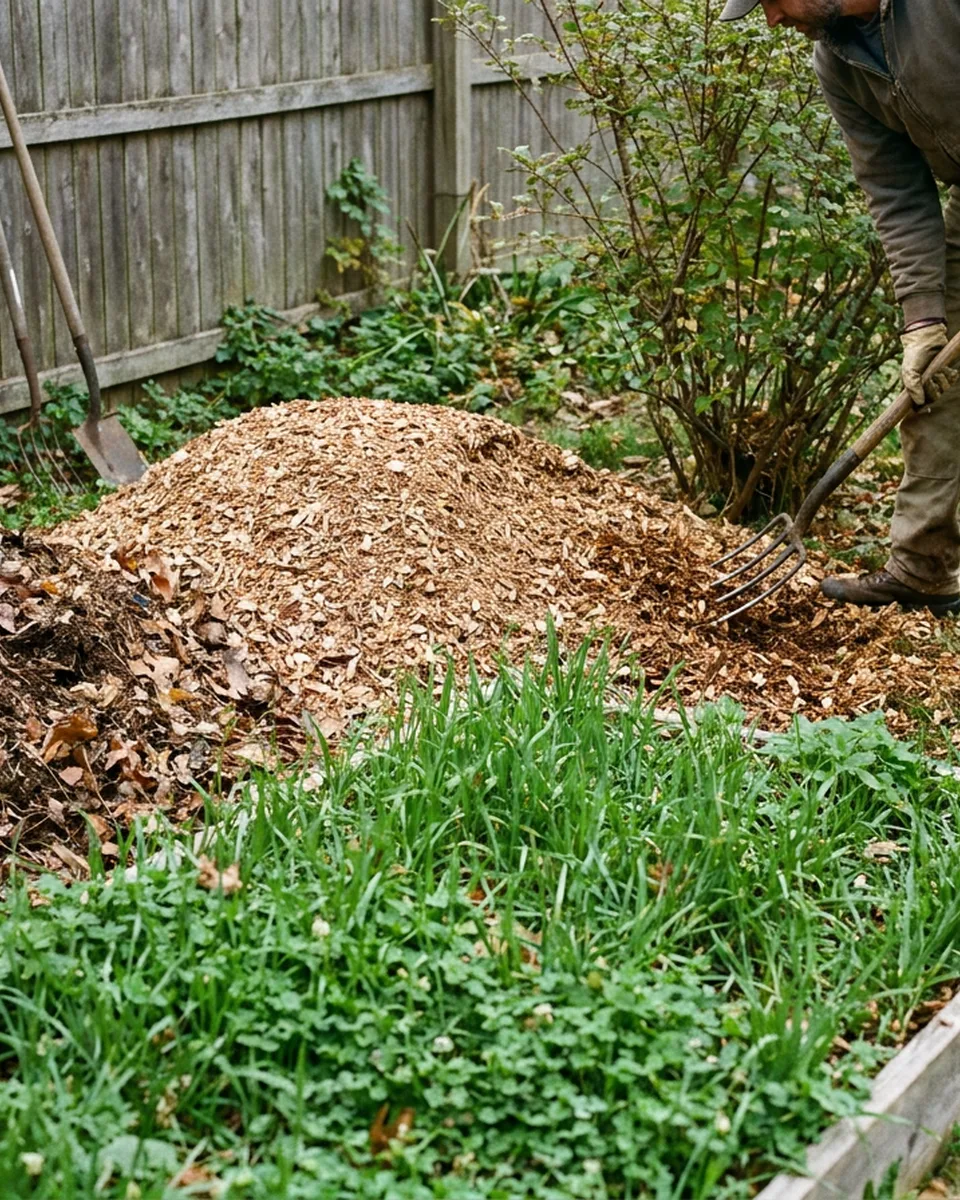
1Wood chips, and the nitrogen myth

Fresh arborist chips do not starve your plants of nitrogen — the nitrogen tie-up happens only in the thin zone right at the mulch-soil boundary, which is actually part of why chips suppress weeds so well. Over time, woody mulch increases nutrient levels in the soil beneath it. The number that matters is depth: 4 to 6 inches controls weeds and improves soil; anything shallower can enhance weed growth instead of blocking it.

2Cover crops fill the gap between plantings

A cover crop isn't for harvest — it's grown to hold and build soil during a bed's empty stretch, whether that's after fall harvest, before spring planting, or the summer lull between cool-season rounds. Pick the species by goal: high-biomass plants build soil structure, nitrogen-fixing legumes add fertility, fast-growing allelopathic species suppress weeds.

3The first hour

For chips, it's a wheelbarrow and a rake, spreading to a measured 4 to 6 inches rather than eyeballing it thin. For a cover crop, it's scattering seed over bare soil right after the last harvest comes out — both are faster than most people expect.

4What goes wrong

A too-thin layer of wood chips does the opposite of its job, letting weeds through while looking tended. Planting a cover crop without a plan for terminating it before spring is the other common miss — an unmanaged cover crop can become the very weed problem it was meant to prevent.

Explore this area
HomeHouseGardenFarm