SiLOSSiLOS

The Brush Pile Birds Call Home

About this photo

1How to build a brush pile that actually helps

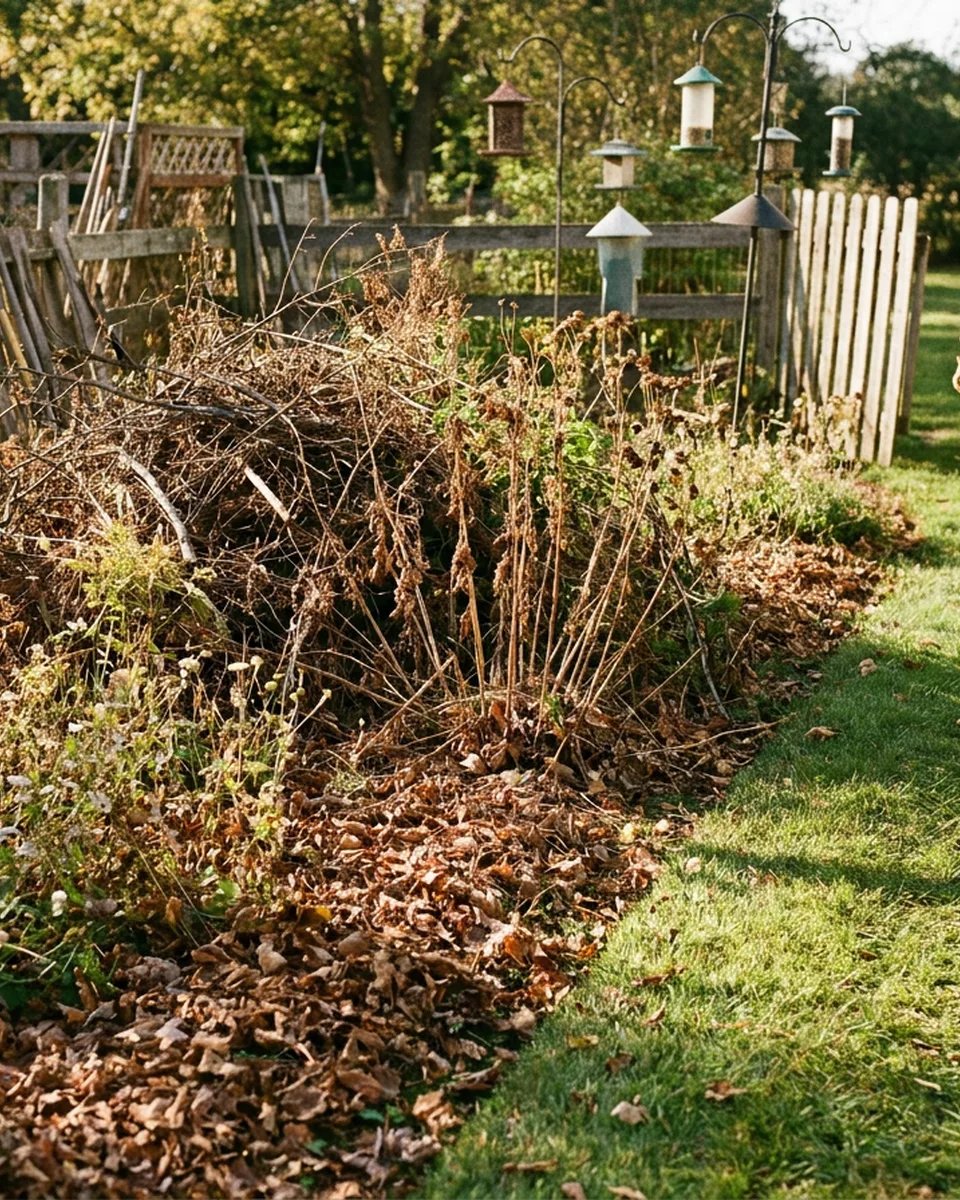
Start with the largest material — pole-sized logs — at the bottom, smaller limbs and shrubs on top, raised slightly off the ground so animals can get underneath into real cover. Placed near forest edges or feeding areas, these piles shelter cottontails and other small mammals and give songbirds a perch, and the big-logs-first order also slows the whole pile's decay.

2Leave the stems up through winter

Standing perennial stems give native bees a place to overwinter, and their seedheads feed finches, chickadees, juncos and sparrows straight through the cold months. Cut them back to about 15 inches above the ground in spring, not fall — that stub height gives bees somewhere to lay eggs and complete their life cycle the following season.

3Fallen leaves are free mulch, not a chore

Left in place, leaves insulate overwintering pollinators, protect soil from drying and temperature swings, suppress weeds, and compost right where they land, enriching the soil for free. Even pine needles work as mulch and, contrary to popular belief, don't meaningfully acidify soil.

4One clean line makes the whole thing look intentional

A simple curved, cut-in edge between the wild patch and the mowed lawn or walkway signals "designed" instead of "neglected" — the eye reads a tidy foreground and boundary line as evidence of a plan, even when everything past that line is deliberately left alone.

Explore this area
HomeHouseGardenFarm