SiLOSSiLOS

Soil Blocks, Cells, or Paper Pots

About this photo

1The three ways compared

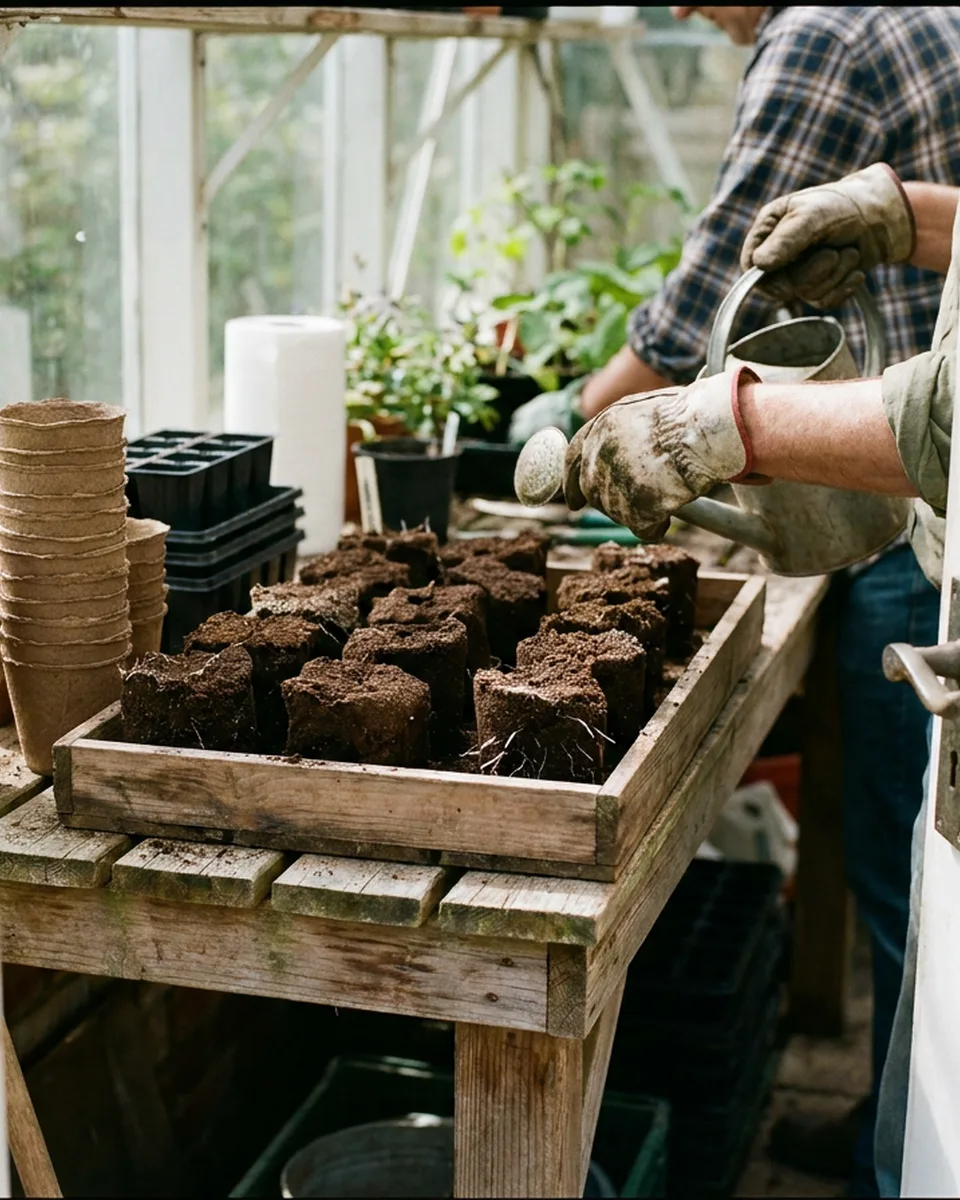
Soil blocks are compressed cubes of a wet, holds-together mix, pressed and ejected from a handheld blocker — roots air-prune at the exposed edge instead of circling, and nothing plastic gets thrown away. Plastic cell trays are the familiar default: cheap, reusable, but roots that hit the wall circle around it and need teasing apart at transplant. Paper pots go into the ground whole, pot and all, skipping transplant shock entirely but breaking down slower in cold or dry soil than people expect.

2What actually goes in a soil block

A workable mix is roughly 2 parts peat moss or coco coir to 1 part compost to 1 part vermiculite or perlite, wetted to the texture of wet concrete or brownie batter — wetter than feels right. Squeeze a handful: it should hold together firmly without dripping. Too dry and the block crumbles apart when ejected; too wet and it sticks to the blocker instead of releasing clean.

3The first hour

Most of the learning curve is in the mix's moisture, not the pressing technique — expect a few crumbled or stuck blocks while you dial it in. A standard blocker makes 1½- to 2-inch blocks, the right size for most vegetable and flower seedlings; bigger 3- to 4-inch blocks exist for potting up before the final transplant.

4

4What goes wrong

Soil blocks' exposed sides dry out faster than a walled pot, so they need more frequent watering and it has to be done from below (a shallow tray of water, not overhead) or the blocks slump. Buying a mix pre-formulated for blocking is the easier starting point; custom recipes take some trial and error before they hold together reliably.

Explore this area
HomeHouseGardenFarm