

SiLOSSiLOS

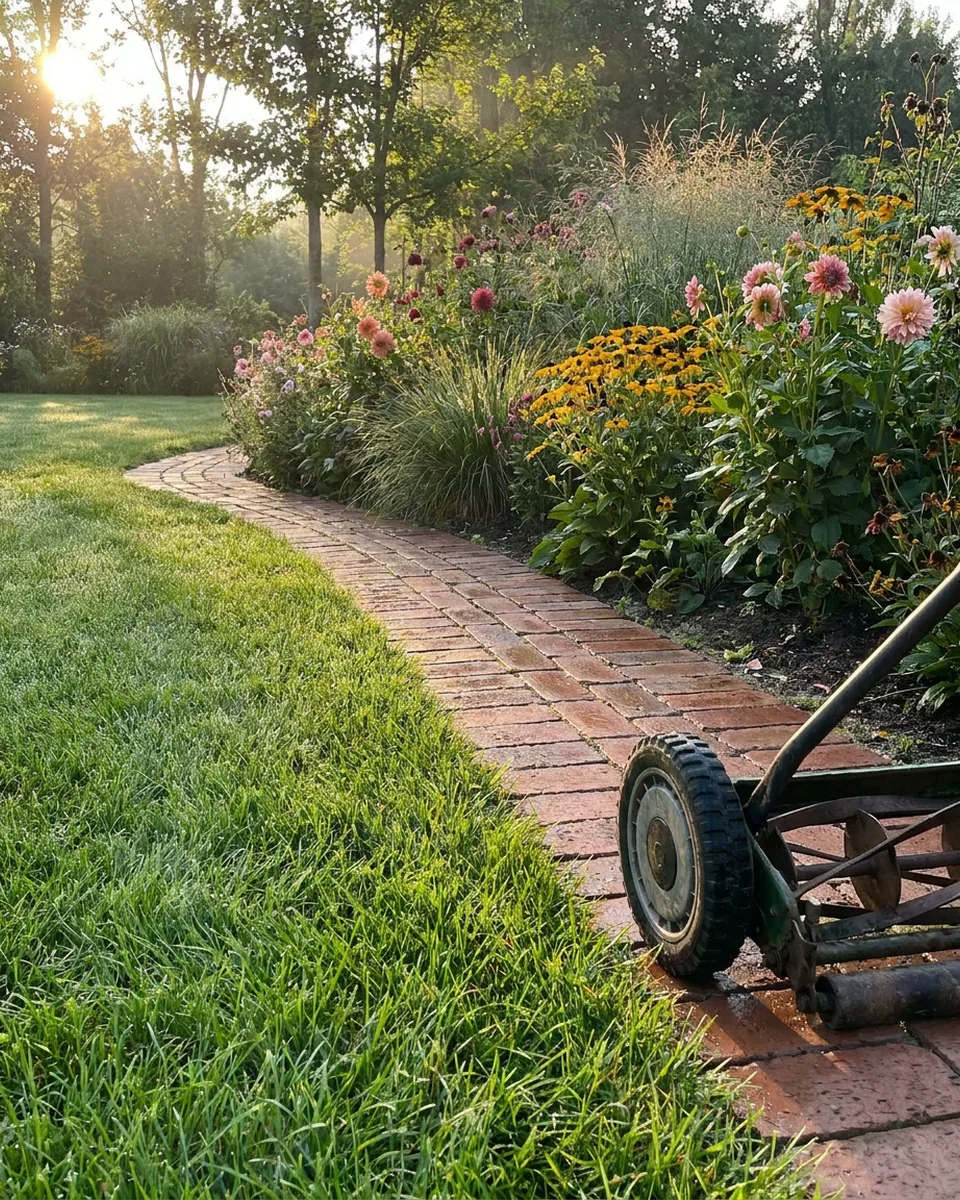
Lay a brick mowing strip this weekend

About this photo

1Buy more brick than you think

Measure the run, then add ten percent for cuts, breaks, and the one brick you drop on the driveway. Old clay bricks from a salvage yard sit flatter and look better than new ones, but any solid brick works. Skip hollow ones. They crumble under the mower wheel and then you have a hobby.

2

2Dig a trench the width of the brick plus an inch

Set a spade straight down along the bed edge and lift out a trench as deep as the brick minus half an inch. The brick should end up just proud of the soil, flush with the grass. Too high and the mower blade finds it. Too low and it disappears by June, buried in its own sediment like a Roman road.

3Sand bed, then bricks, then sand again

An inch of coarse sand in the trench lets you nudge each brick level with the next. Lay them snug, check with a short board, then sweep dry sand into the joints until the gaps fill. Rain settles it the rest of the way. Some people use paver base under the sand, which is right for driveways and overkill here.

4Curve it if the bed curves

Straight runs are easy. Curves take smaller gaps on the inside of the bend, which reads as charm from ten feet away. For tight curves, cut bricks with a mason's chisel or rent a wet saw for an afternoon. Most people rent the saw once, cut everything, and return it before dinner.

5

5What goes wrong on day three

A brick or two settles crooked where a mole or a heavy boot found it. Pry it up, add a pinch of sand, tap it back. That is the entire maintenance program. Every year or two, more sand in the joints if weeds move in. The lawn edge, meanwhile, stays sharp without a single hour of edging.

Explore this area
HomeHouseGardenFarm