
SiLOSSiLOS

The fire pit that doesn't smoke you out

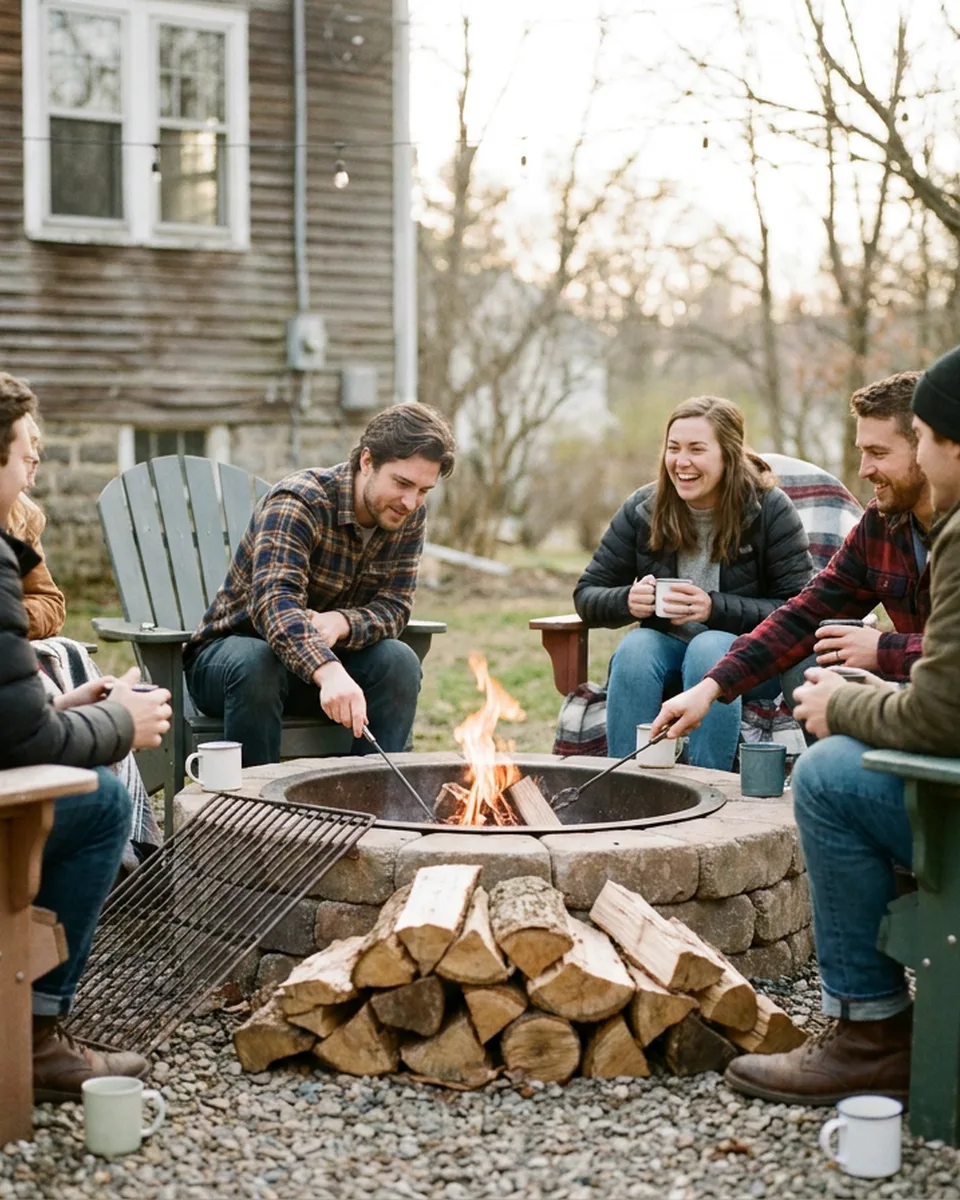
About this photo
1

1Clearance isn't a guess, it's a number

Open recreational fires generally need 25 feet of clearance from structures and combustible material; a contained fire pit or portable outdoor fireplace needs at least 15 feet; a propane or natural gas fire pit or grill needs at least 10 feet. Where a pre-fabricated gas fire pit vessel is certified, expect at least 6 feet of clearance above the flame as well.

2

2The 20 percent rule for wood

Wood burns cleanest at 20 percent moisture content or less, which normally means seasoning split logs for 6 to 12 months before burning. Damp wood burns cooler, which means incomplete combustion — more smoke, not less heat. Two easy field tests: seasoned wood has deep radial cracks at the cut ends, and it 'rings' instead of 'thudding' when you knock two pieces together.

3

3Why smoke seems to hunt one specific person

The same buoyancy physics that drives air up a chimney (warm air is less dense, so it rises and pulls replacement air in behind it) governs how smoke drifts off an open fire: it follows whatever thermal draft and cross-breeze exist at that exact moment, which shifts as the fire burns and the air cools and warms around it. There's no permanently smoke-free seat, only a temporarily lucky one.

4

4Site the woodpile away from the house

Keep a stacked woodpile a real distance from the house — extension guidance points to roughly 30 feet as adequate — since insects and rodents living in a woodpile are happy to move a few extra feet closer to a warm foundation.

Explore this area
HomeHouseGardenFarm