
SiLOSSiLOS

Sourdough Starter: Flour, Water, and Regular Meals

About this photo
1

1The first ten days

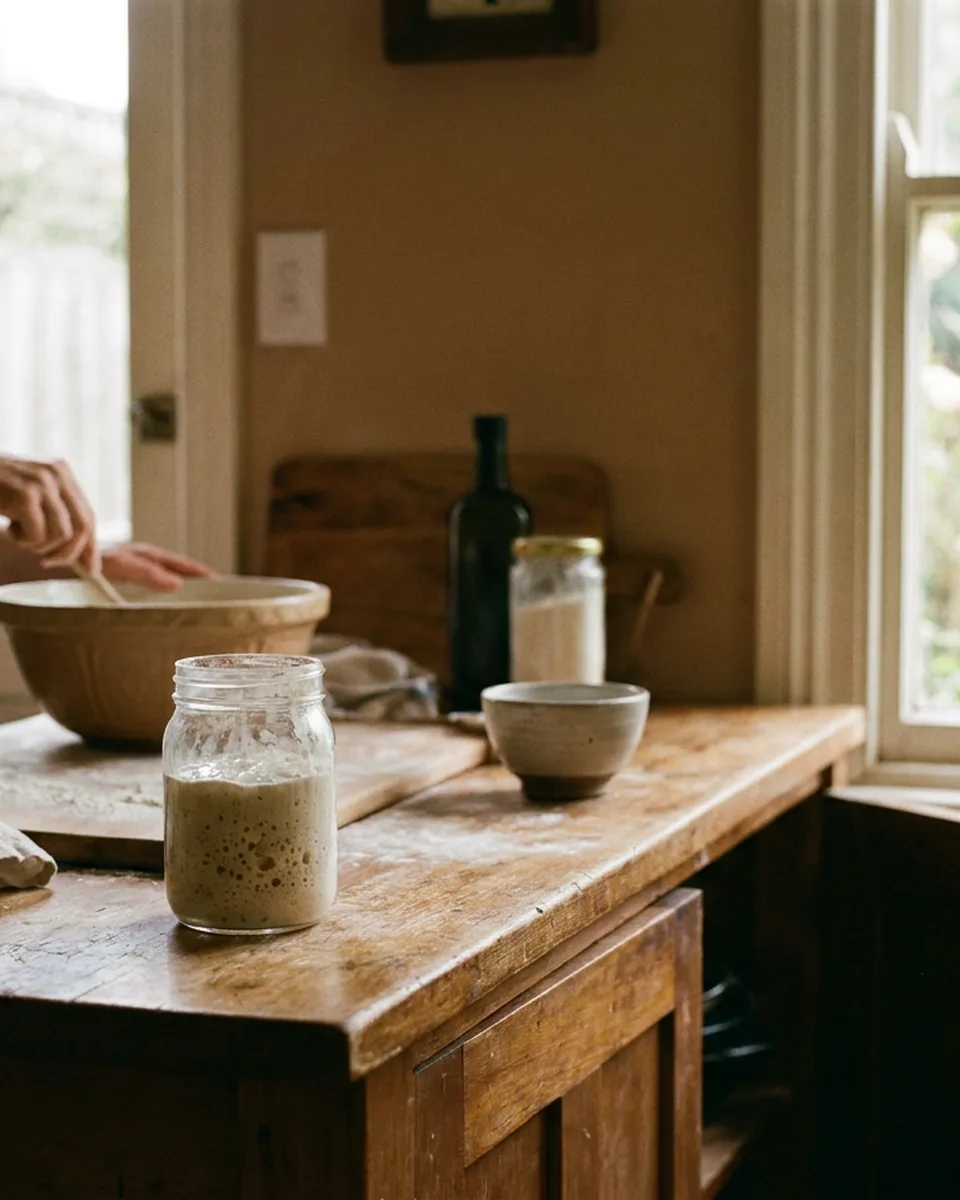
You are not baking yet. You are farming wild yeast and bacteria that are already on the flour and in your kitchen air, and they need a warm, fed, roughly-70-degree room to build up numbers. Most starters are ready to bake with in seven to ten days; some sulk for up to two weeks before the bubbles show up, and that is still normal, not failure.

2

2Feeding is the whole relationship

Once it is established, the routine is: pull it from the fridge, let it sit an hour or two, stir, keep about half a cup, and feed that half cup with half a cup of water and three-quarters to a full cup of flour. Do that weekly and it will outlive the fridge it lives in.

3

3Discard, or the starter eats your kitchen

If you do not discard before feeding, the math turns against you fast: thirty grams of starter fed thirty grams each of flour and water becomes ninety grams, which then wants ninety more of each, and so on. Discarding first is what keeps a starter a jar and not a bucket.

4

4The one real hazard

Flour is a raw agricultural product, not a ready-to-eat food, and it can carry contamination picked up anywhere along the way to your counter. Don't taste raw starter to check it; judge it by bubbles, smell and rise instead, and let the oven do the actual killing of anything that shouldn't be there.

5

5When it looks dead, it usually isn't

A dry film on top is usually the starter losing moisture under a towel or cheesecloth, not a health problem; switch to a snug lid or plastic wrap. Cold kitchens slow everything down, so a lot of stalled starters just need a warmer spot, like the inside of an unlit oven with the light left on.

Explore this area
HomeHouseGardenFarm