SiLOSSiLOS

Fermenting in a Jar: Sauerkraut, Kimchi, Hot Sauce

About this photo
1

1It's bacteria, not magic

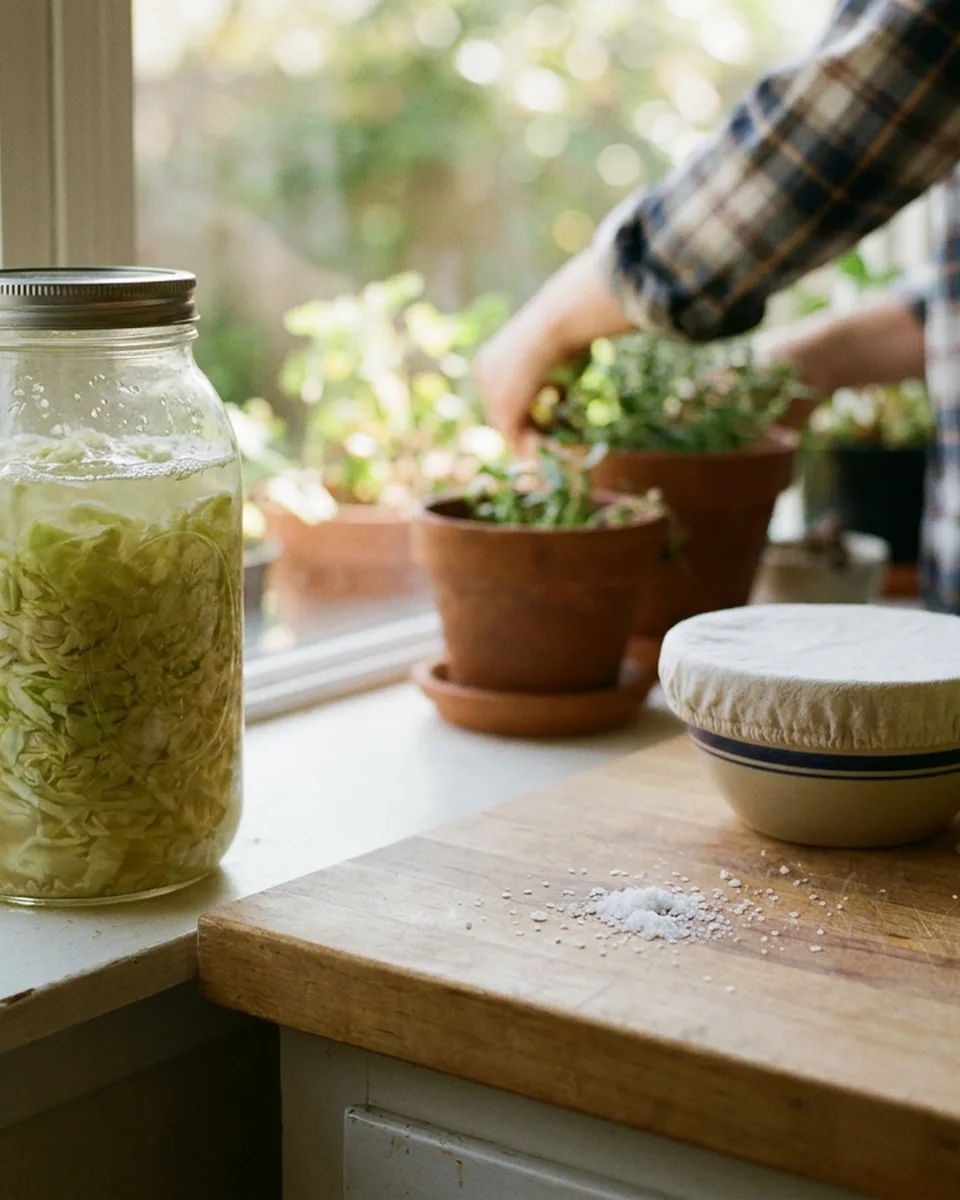
Lactobacillus bacteria already living on the vegetable convert its sugars into lactic acid, which is what drops the pH low enough that spoilage organisms can't compete. The bubbles are carbon dioxide, a byproduct of the same process, not a sign anything's gone wrong.

2

2Temperature runs the whole show

The sweet spot for kraut and most vegetable ferments is 70 to 75°F; that's warm enough for the fermentation to move but cool enough to keep the wrong yeasts and molds from taking over. Run it hotter and it's more likely to turn on you; colder and it just takes longer, sometimes six weeks instead of three to four.

3

3The one real hazard

Everything starts with clean hands and clean equipment: wash for at least twenty seconds, sanitize your jars and cutting boards in water above 160°F, and don't scrub the produce so hard you strip off the very bacteria that's supposed to do the work.

4

4Cabbage waits for frost, kind of

Cabbage cut after the first frost has more natural sugar built up, which gives the fermentation more to work with, so a lot of kraut-makers time their batch around it on purpose rather than by the calendar.

5

5Hot sauce plays by the same rules, different acid

A safe hot sauce still needs an acid, usually vinegar or lime juice, to hold the pH down; the peppers are for heat, the acid is for safety, and treating them as the same ingredient is the mistake that gets people into trouble.

Explore this area
HomeHouseGardenFarm