

SiLOSSiLOS

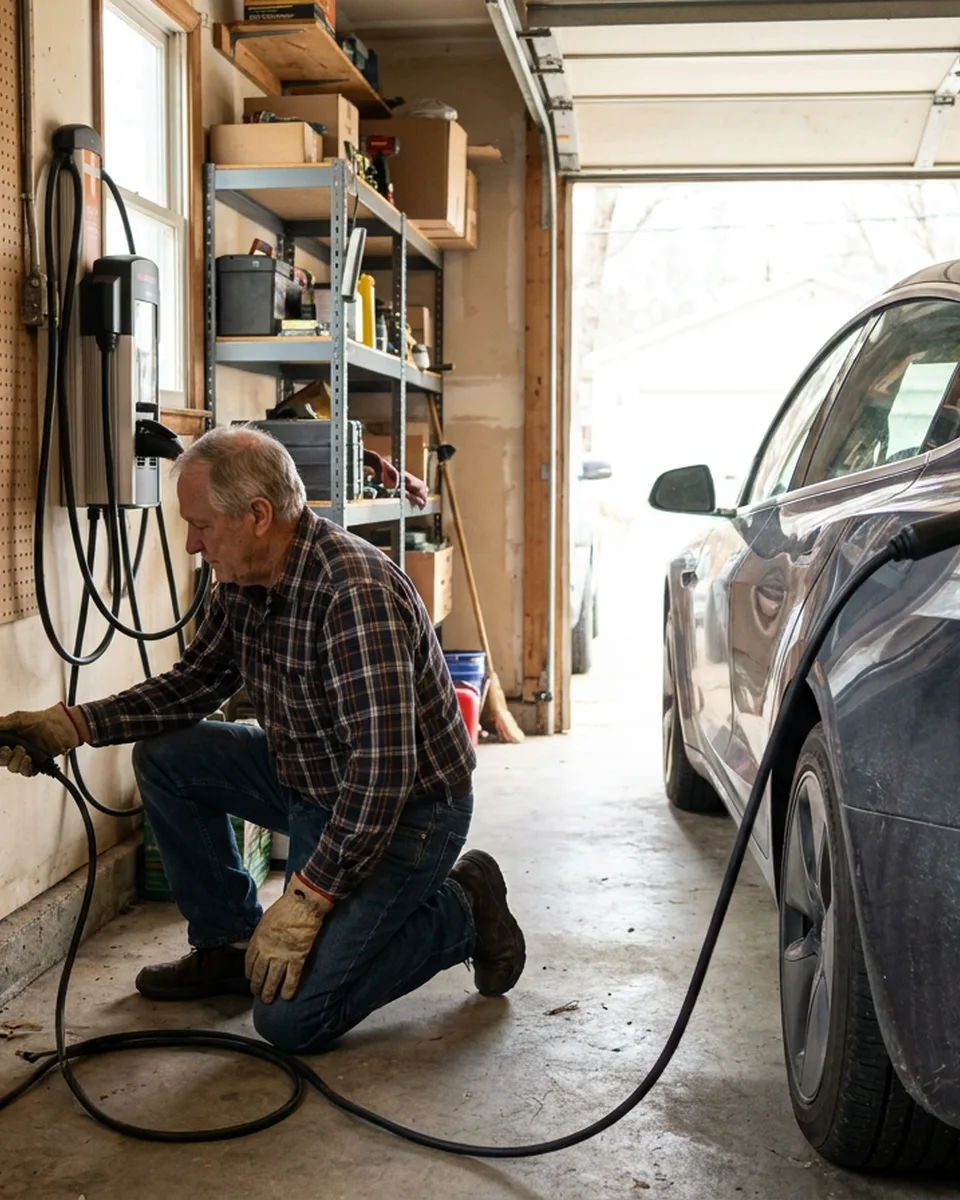
Charging an EV from a regular garage outlet

About this photo
1

1A standard outlet already works, slowly

Level 1 charging uses a common residential 120-volt AC outlet and can take 40 to 50-plus hours to charge a battery electric vehicle to 80 percent from empty, or 5 to 6 hours for a plug-in hybrid; it's not a nonstarter, it's just built around overnight-and-then-some charging.

2

2Level 2 is the real garage upgrade

Level 2 equipment runs on 240-volt residential (or 208-volt commercial) electrical service and can charge a battery electric vehicle to 80 percent in 4 to 10 hours, or a plug-in hybrid in just 1 to 2 hours; it's the standard for home, workplace and public charging specifically because it fits a normal daily schedule.

3

3Fast charging isn't really a home option

Direct current fast charging can reach 80 percent in just 20 minutes to an hour, but it's deployed along heavy-traffic corridors at dedicated stations, not something installed in a home garage, and most plug-in hybrids on the market don't even work with it.

4

4The outlet itself needs a checkup before it gets a car plugged into it daily

Before either option gets daily use, the outlet should be inspected: it should feel cool to the touch, not warm, since an outlet or switch that's overheating usually means a loose screw on a wire or a worn-out connection underneath, and any ground fault circuit interrupter (GFCI) protection nearby should be tested regularly since it's what prevents electrocution.

5

5The circuit breaker behind the outlet has its own math

A charging circuit's breaker is sized at 125 percent of the equipment's continuous draw, not a bare match to it: a Level 1 setup pulling 16 amps needs a 20-amp breaker and a grounded outlet with GFCI protection within 12 inches of the plug, while a Level 2 install's fixed wiring is commonly protected by a 40-amp breaker. That's the panel-capacity question a homeowner actually needs answered before either option gets installed.

Explore this area
HomeHouseGardenFarm