
SiLOSSiLOS

Build your first workbench to elbow height

About this photo
1

1Elbow height is the real standing-work rule

Standing for extended periods places static load on the back, and the fix starts with the work surface itself: generally, standing work should happen at approximately elbow height, adjusted down for tasks needing significant downward force and up for fine detail work.

2

2An anti-fatigue mat is part of the ergonomics, not an accessory

Standing on an anti-fatigue mat instead of a hard floor, and keeping the torso upright with the spine's natural curve, are both direct recommendations for reducing back injury risk from standing work, exactly the posture a workbench session puts someone in for hours.

3

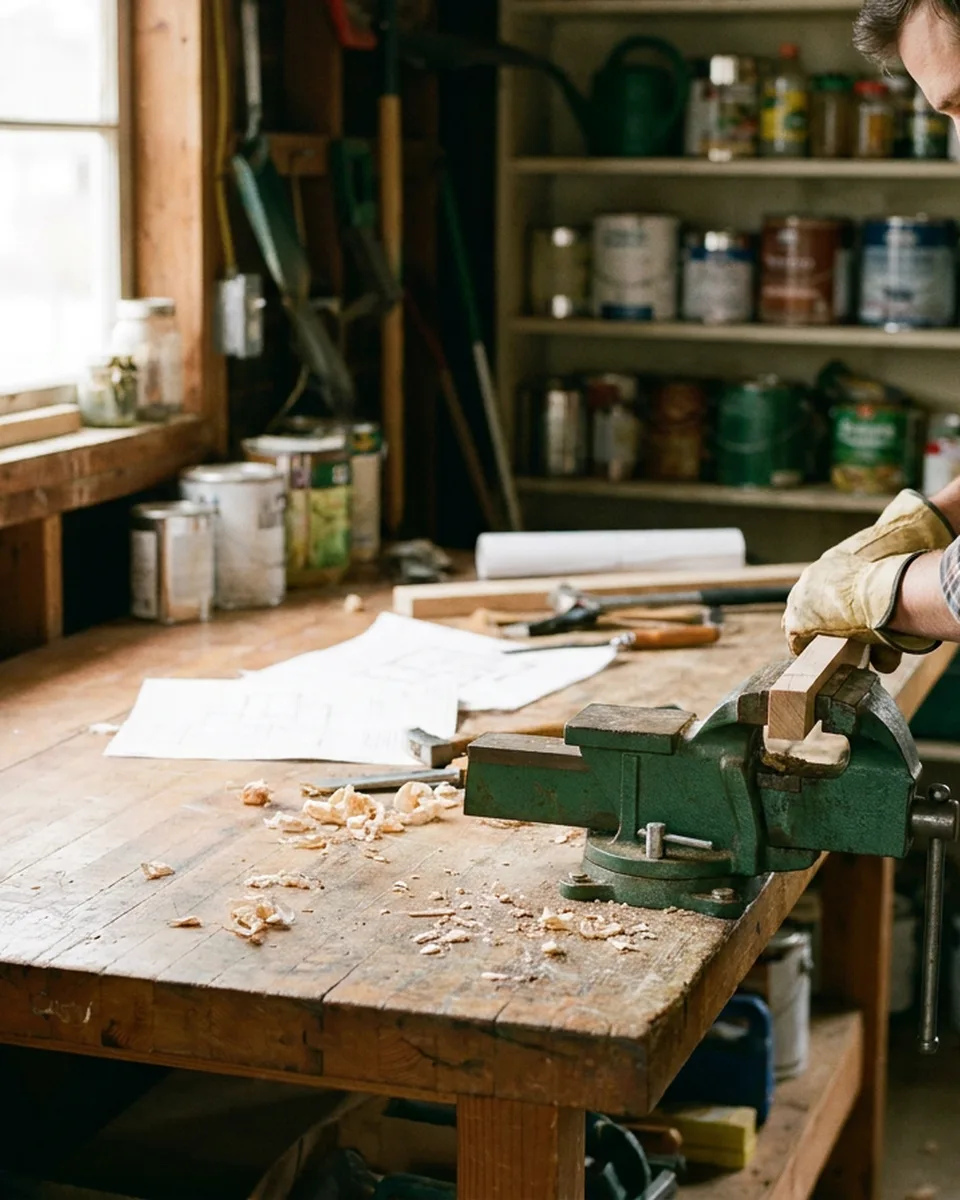
3A vise is a front-or-end decision, not just a purchase

A woodworking vise mounts either on a bench's long face, a front (or face/shoulder) vise, or on the end, a tail vise; a common setup puts the front vise on the left of the long side and the tail vise on the right of the diagonally opposite end, letting a right-handed woodworker work a piece from either grip.

4

4The real hazards are blades, not clumsiness

Improperly or inadequately guarded machines are among the top OSHA violations in woodworking shops, and lacerations, amputations and eye injuries sit alongside wood dust and finishing-chemical exposure as the real, documented risks of the space a workbench lives in.

5

5Kickback is the table-saw hazard with a name

Kickback is a saw seizing the stock and hurling it back at the operator; it happens more often when ripping with the grain than when cross-cutting, and a dull blade or a blade set at the wrong height is enough to trigger it, which is why a riving knife or spreader behind the blade is the one guard a bench-side table saw shouldn't run without.

Explore this area
HomeHouseGardenFarm