SiLOSSiLOS

A herb wall three steps from the grill

About this photo
1

1The short version

The plants that flavor everything you cook outside are, conveniently, almost the same plants that love standing next to the heat and reflected glare of the grill itself. Most belong to one of two families: mint, which includes basil, oregano, rosemary, thyme, lavender and sage, and the carrot family. Nearly all of them need at least six hours of direct sunlight a day, with full sun producing the best growth, and well-drained soil, avoiding heavy clay or wet, nutrient-rich spots.

2

2Why this works

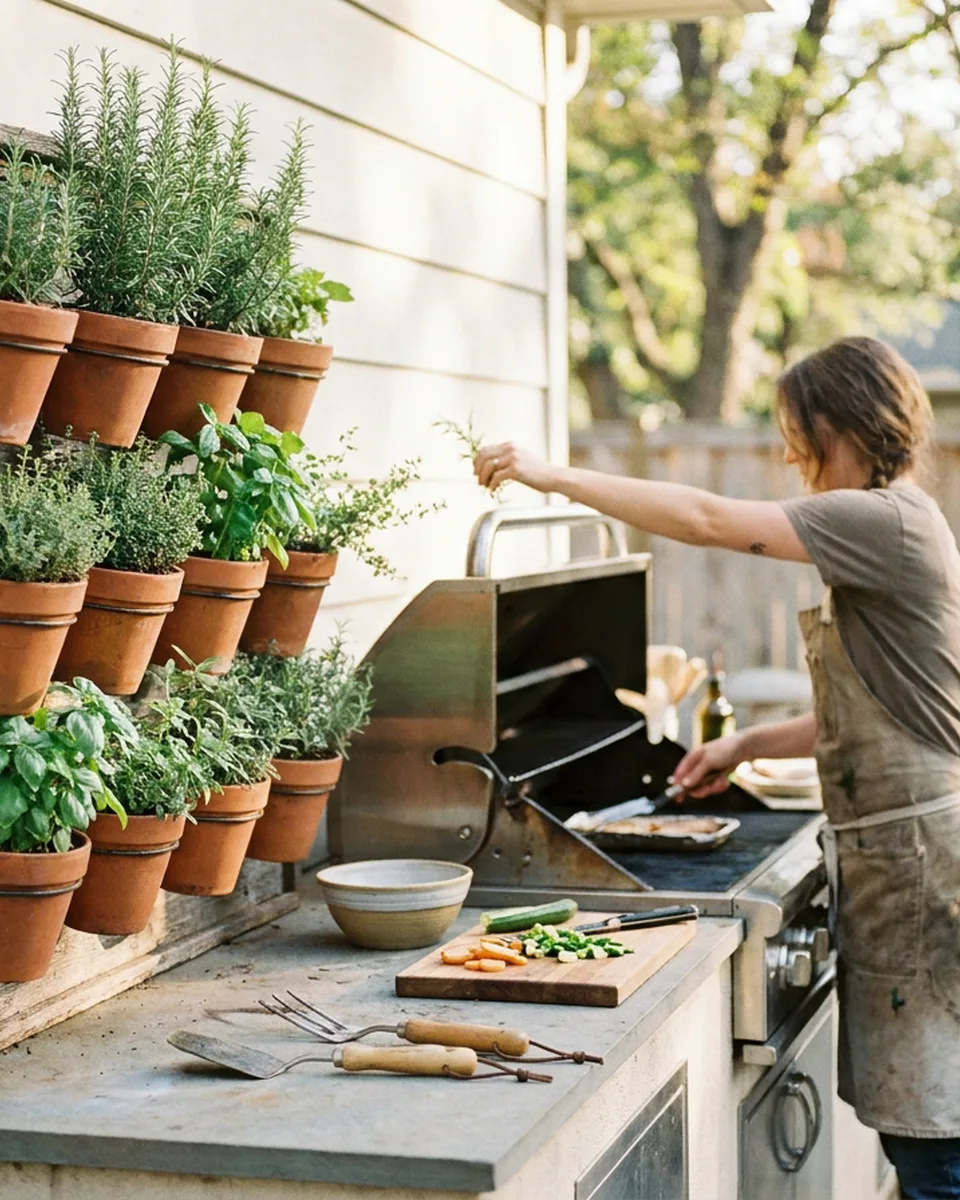
A grill patio is almost always the sunniest, driest, most reflected-heat spot in the yard, which happens to be exactly the growing condition most mint-family herbs actually prefer. Mounting the herbs vertically, in a wall planter or stacked pockets, keeps them within arm's reach of the grill without taking up any patio floor space at all. Harvesting little and often by snipping leaves and stems as needed is the correct way to pick herbs anyway, so a grill-side wall gets used exactly the way the plants want to be treated.

3

3What goes wrong

Container and wall-mounted plantings dry out faster than an in-ground bed, and the advice to water regularly and never let the plants wilt matters more here than almost anywhere else in the yard, since a vertical planter right next to a heat-radiating grill loses moisture fast on a hot cooking day. Overwatering in a heavy, poorly drained mix causes the opposite failure, root rot, which is why soil choice matters as much as the watering schedule.

4

4The first hour

Group herbs by water needs rather than alphabetically or by looks: rosemary and thyme, which tolerate drier soil, in one section, basil and mint, which want more consistent moisture, in another. Getting that grouping right in the first hour saves months of one section drowning while another dries out.

Explore this area
HomeHouseGardenFarm