


SiLOSSiLOS

Wood or composite deck boards: the real cost

About this photo
1

1The short version

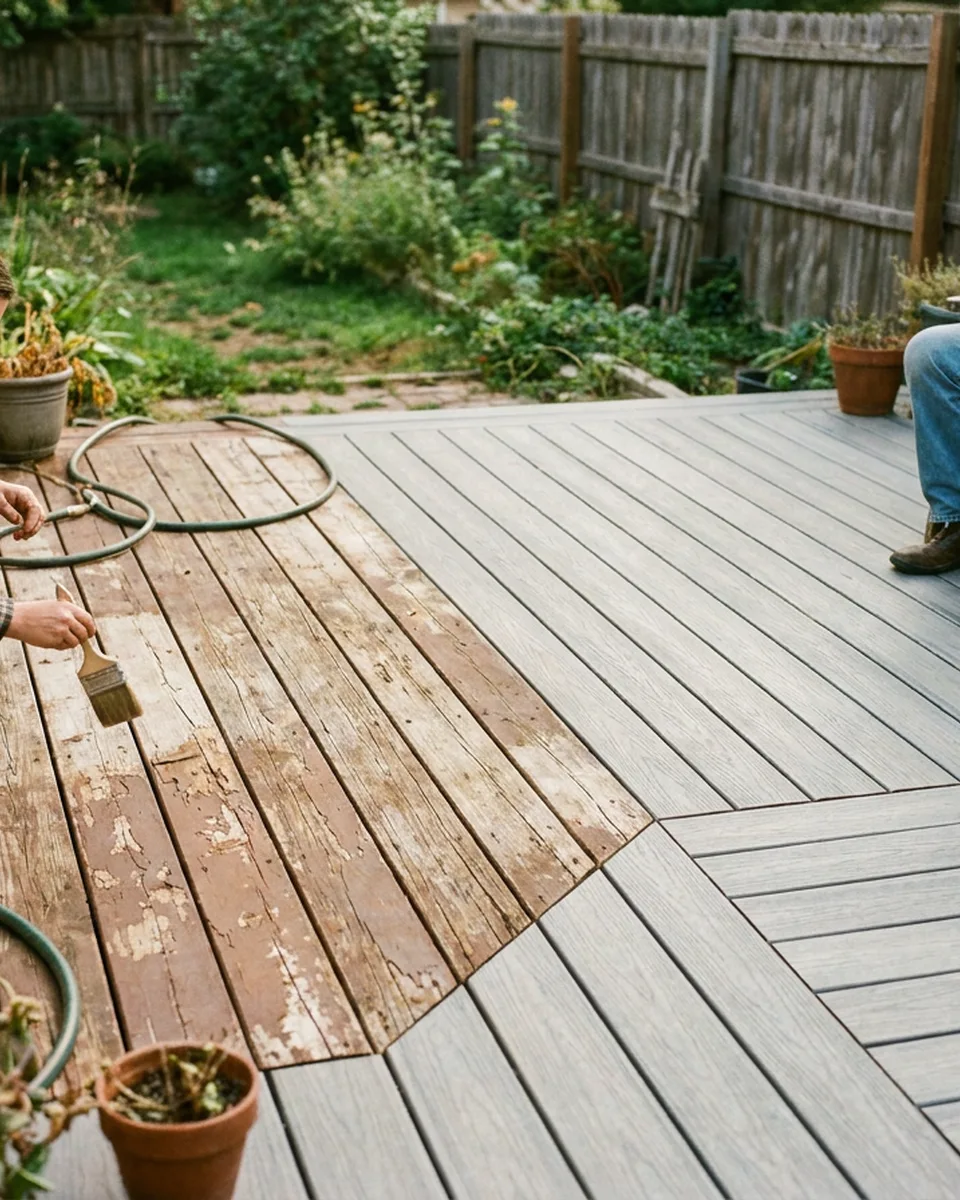
Somebody on your street already made this decision for you, badly or well, and you can usually tell which just by looking at their deck ten years later. Most decks are still built of pressure-treated pine, redwood, cedar or mahogany, but composite lumber, a mixture of wood fiber, plastic and a binding agent, has grown steadily since the 1990s because it offers the look and workability of wood while being more water resistant and needing less maintenance. Wood preservation treatments protect the wood option against fungi, termites and insects as well as UV and moisture cycling; composite skips most of that maintenance by not being susceptible to the same decay in the first place.

2

2The two or three ways people actually pick

Budget-first builders default to pressure-treated pine, the cheapest board on the lumber yard's rack, and accept the annual staining or sealing that comes with it. People planning to stay in the house long-term, or who are simply tired of yearly deck maintenance, move to composite or PVC decking, paying more per board up front to buy back their weekends. A smaller group chooses a naturally durable hardwood like ipê for its look and real longevity, accepting a higher material cost and harder-to-source lumber in exchange for skipping chemical treatment altogether.

3

3What it takes, and what goes wrong

Composite lumber is less likely to split or delaminate than wood and is more stain, scratch and mold resistant, and some composite products are engineered lighter for easier handling during installation. The common wood mistake is skipping the yearly reseal, which lets moisture cycling and UV do their damage early; the common composite mistake is assuming zero maintenance means zero cleaning, when a periodic wash is still needed to keep mold from finding a foothold on the surface.

4

4The first hour

Either material starts the same way: measuring the joist spacing the boards will actually span, since board thickness and span ratings differ by product and are not interchangeable between wood and composite systems. The visible part, laying the first board dead straight along a chalk line, is oddly the fast part once the layout math is done.

Explore this area
HomeHouseGardenFarm