SiLOSSiLOS

Build a simple French drain in a weekend

About this photo
1

1The short version

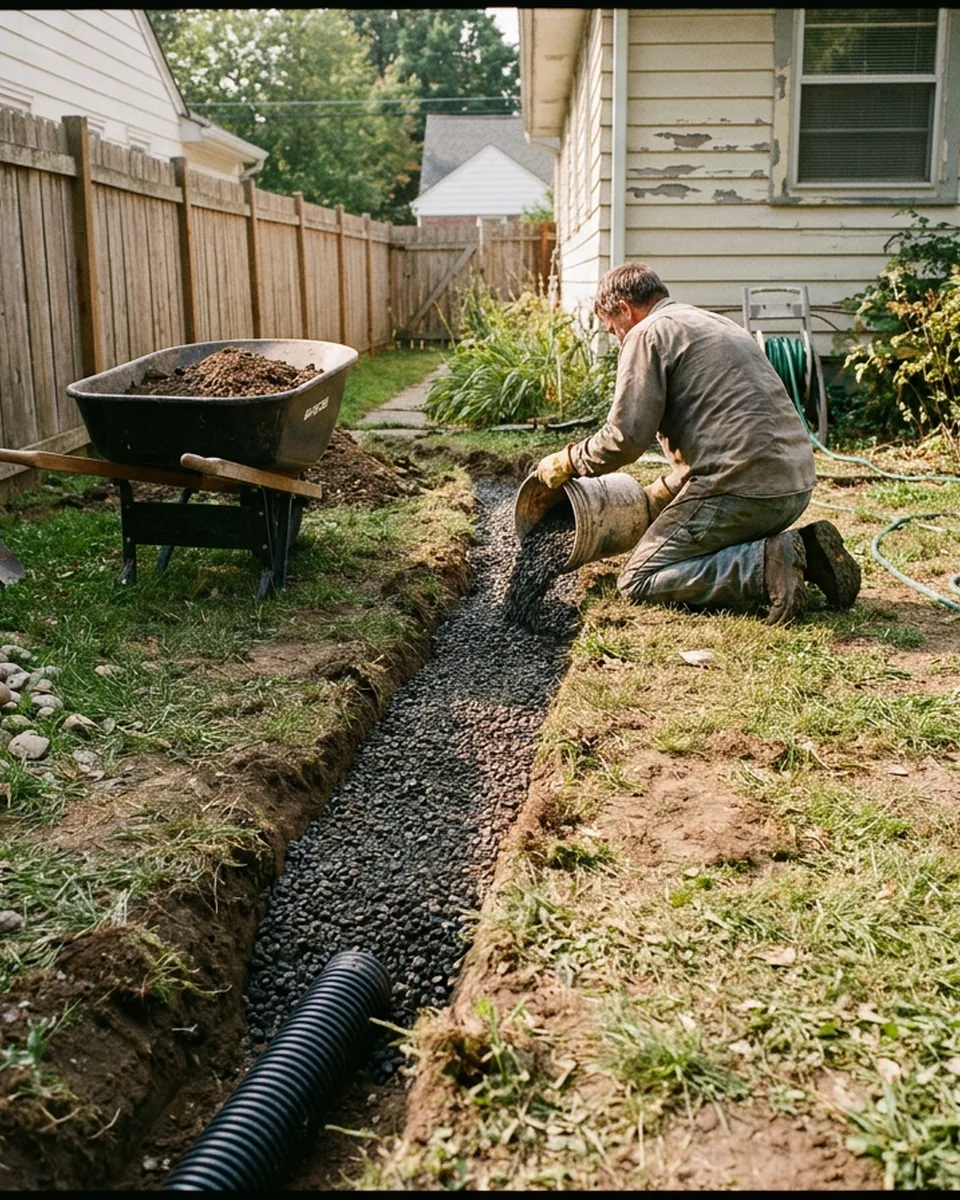
It's embarrassing how simple the fix is once you've dug it. A trench filled with gravel, with or without a perforated pipe, redirects surface water and groundwater away from an area; the perforated pipe inside one is called a weeping tile because it exudes, or weeps, the water it collects. French drains are used specifically to prevent ground and surface water from penetrating or damaging building foundations, and behind retaining walls to relieve groundwater pressure.

2

2A little history, because it explains the design

The earliest French drains were simple gravel-filled ditches pitched from a high point to a low one; Henry Flagg French, a lawyer and Assistant U.S. Treasury Secretary, described and popularized the technique in his 1859 book Farm Drainage. The design has barely changed since, because the physics it relies on, gravity moving water along the path of least resistance through gravel, hasn't changed either.

3

3What it takes, and what goes wrong

The trench needs a consistent slope along its whole length, typically dug by hand for a residential run; skipping the slope and relying on the gravel alone to move water is the single most common reason a French drain stops working within a year. The pipe, when used, should sit wrapped in landscape fabric to keep fine soil from washing in and clogging the perforations over time, since a clogged weeping tile is functionally just a buried, useless pipe.

4

4The two or three ways people actually do it

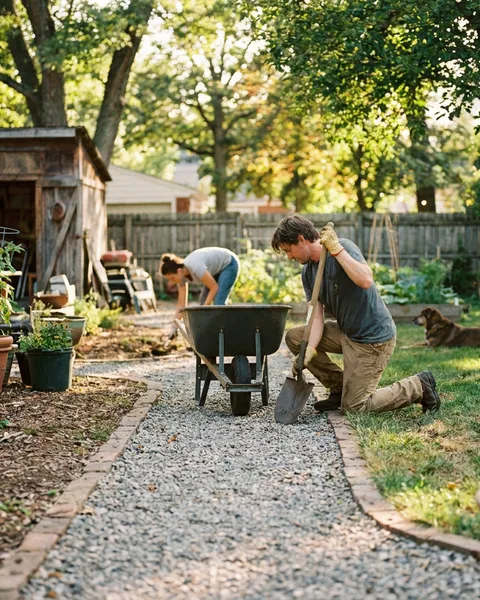
A shallow surface French drain, gravel only, no pipe, handles light surface water in a weekend with a shovel and a wheelbarrow. A piped version, deeper and requiring more excavation, handles a genuine wet-yard or foundation problem and often ties into the same discharge point as a downspout extension. Behind a retaining wall, a French drain becomes part of the wall's own design from the start, relieving the groundwater pressure that would otherwise push the wall over.

Explore this area
HomeHouseGardenFarm